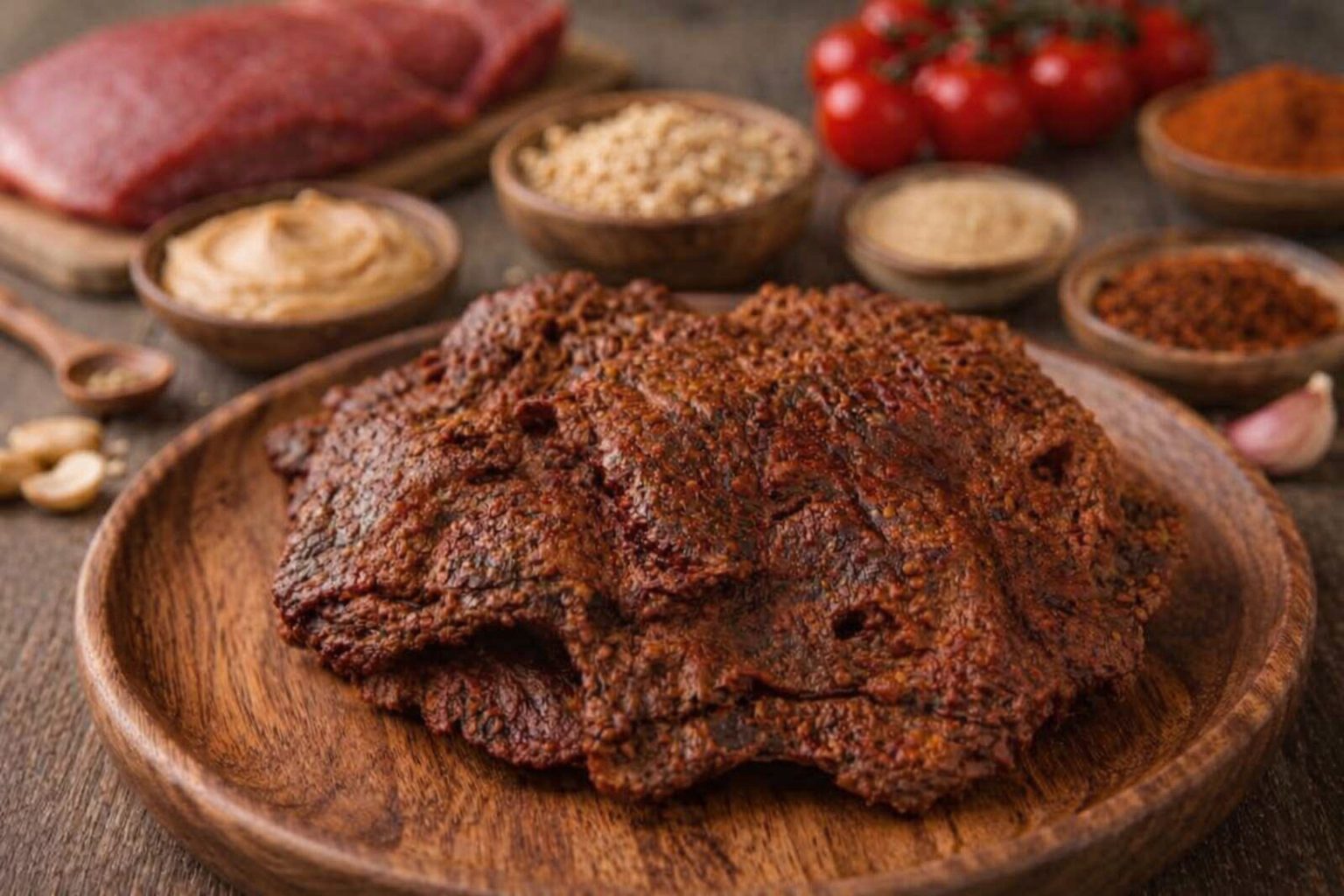
Close your eyes for a second. Imagine paper-thin ribbons of premium beef hanging in still air for three days. A paste of roasted peanuts, smoldering chili, and African ginger pressed into every strip by hand. The first bite cracks. The second melts. By the third, you understand why villages in northern Cameroon have been making this exact recipe for centuries — and why your kitchen is about to smell like one.
If you’ve never had Kilishi, the easiest way to describe it is beef jerky’s older, more soulful cousin: slow-dried for three days, hand-rubbed with a paste of roasted peanuts and chili, built around a recipe that’s been passed down in West Africa for generations. That’s Kilishi. Everything else is a bag of chemicals pretending to be meat.
It's a snack with deep roots in northern Nigeria, Niger, Cameroon, and across the Sahel. In Hausa-speaking communities you'll see it sold at market stalls, hung in long strips above the vendor's table, smelling of dry heat and groundnut. At FLANDEX, Calvin Kamdem — the founder — grew up eating it in Cameroon. Bringing the recipe to Rosedale, Maryland and getting it USDA approved was the project of years, not months.
The Short Definition
Kilishi is a thin, slow-dried, peanut-coated beef preparation from West Africa. Lean beef is sliced almost paper-thin, dipped in a marinade called labu (a paste of roasted groundnuts, ginger, garlic, onion, salt, and chili), then air-dried over multiple days until the meat is firm but still pliable. It's eaten as a snack, a beer pairing, a road-trip food, or the thing you bring out when guests visit.
What Makes It Different From American Beef Jerky?
The bag in a US gas station and a strip of real Kilishi are not the same product. A few honest differences:
- The crust. American jerky leans on sugar, soy, and liquid smoke. Kilishi gets its character from a peanut paste rubbed directly onto the meat. That paste forms a crust as the beef dries.
- The slice. Jerky strips are thick. Kilishi is sliced thin enough that you can almost see light through a finished piece. That's deliberate — it's what lets the labu actually flavor the meat all the way through.
- The drying time. American jerky is usually dehydrated in hours. Traditional Kilishi takes around three days.
- The heat. Most American jerky is sweet first. Kilishi is savory, smoky, and warm from chili — never sugary.
For a deeper side-by-side, see Kilishi vs American beef jerky.
Why the 3-Ounce Pack?
One of the questions FLANDEX gets most is: "Why is the bag so small?" The honest answer is that real Kilishi is dense. Three ounces of dried, hand-coated beef is closer in eating volume to six or seven ounces of fresh jerky. It's also a premium ingredient — no preservatives, no shelf-stabilizers, no shortcuts — so the pricing reflects the labor and the cuts that go in.
If you eat it the way it's eaten in Cameroon, you tear off small pieces and chew slowly. A 3 oz bag is enough to share between two or three people with drinks.
An Important Note on Peanuts
Every FLANDEX Kilishi product contains peanuts. The roasted-groundnut paste isn't a topping — it's structural to the recipe. If you have a peanut allergy, this is not a product you should eat. Every bag carries the allergen disclosure required by US food labeling law.
How to Eat It
However you want. The most common ways:
- Plain, straight out of the bag, with cold drinks.
- Crumbled over jollof rice or a simple tomato stew — it acts like a meaty seasoning.
- On a charcuterie board with cheese, nuts, and dried fruit. Americans new to it have started doing this and it works well.
- Cut into ribbons and folded into scrambled eggs or breakfast hash.
Where to Try It
FLANDEX makes Kilishi in three heat levels — Mild, Spicy, and Extra Hot. If this is your first time, the Mild is the easiest introduction. If you grew up eating Naija or Cameroonian Kilishi, the Spicy is the closest to what you remember. The Extra Hot is for people who already know they like chili and want it to bite back.
"It's as close as you can get to authentic Naija kilishi outside Naija, and I've tasted many different ones." — Esther, verified FLANDEX customer on Etsy
If you want the longer history, the cultural background, and the full traditional process, the next post in this series walks through how Kilishi is actually made — the 3-day process.