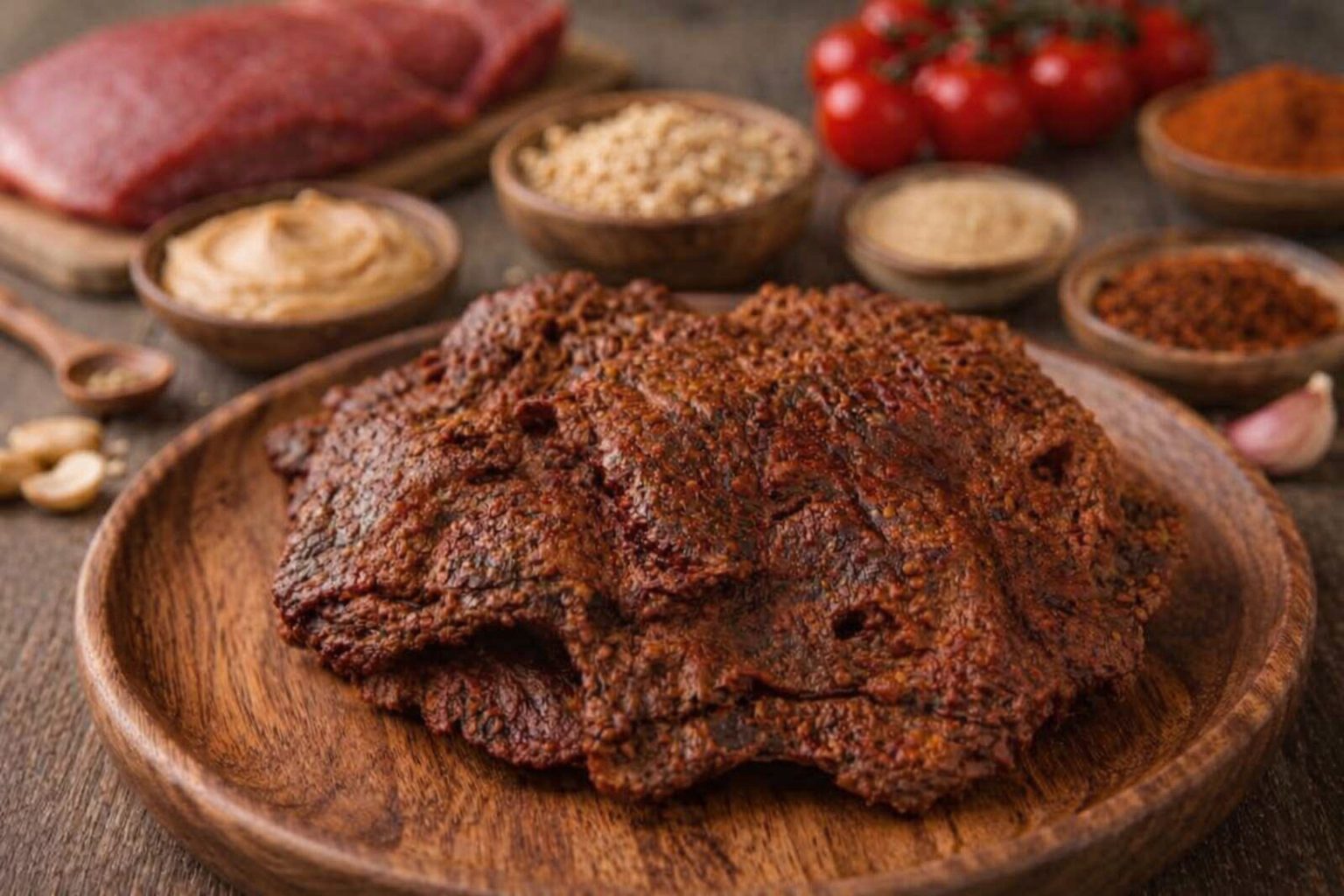
Two products. Both called “beef jerky.” That’s where the similarity ends. One spends three days drying in front of a careful pair of hands. The other spends three hours in an industrial dehydrator. You can feel the difference in the first bite — in the snap, the warmth, the way the peanut crust dissolves into the meat. Here are the seven honest differences, with nothing dressed up.
People who’ve grown up on Slim Jim and Jack Link’s sometimes confuse FLANDEX Kilishi for “just another beef jerky.” It isn’t. They share a category the way an espresso and a pumpkin-spice latte share a category. Once you know the differences below, you’ll never mistake them again — and you’ll have a hard time going back.
The Slice
American jerky is typically thick: a quarter-inch strip you can fold in half. Traditional Kilishi is sliced almost paper-thin — closer to a millimeter. Why? Because the seasoning paste needs to penetrate the entire piece during the long drying process. A thick cut would dry on the outside and stay raw-flavored on the inside. A thin cut absorbs the seasoning end to end.
The Coating
Most American jerky is brined or marinated in a liquid — soy sauce, Worcestershire, sugar, sometimes liquid smoke. The flavor lives inside the meat fibers.
Kilishi is coated with a paste called labu, made from roasted groundnuts (peanuts), powdered chili, ground ginger, garlic, salt, and onion. The paste is hand-rubbed onto each thin slice before drying. As the meat dries, that paste forms a crust. You can see it, taste it, feel it on your fingers. That crust is the single most distinctive thing about real Kilishi.
The Drying Time
American jerky: typically 4 to 12 hours in a dehydrator. Kilishi: around three days. The slower drying does two things: it concentrates flavor without burning it, and it allows the peanut-chili paste to fully bond to the meat.
The Sweetness
Walk down the jerky aisle in a US grocery store and read the ingredient lists. You'll see sugar, brown sugar, honey, or maple in almost every bag. Sweet-and-savory is the default American flavor profile.
Kilishi has no added sugar. It's savory first, with warmth from chili, depth from the roasted peanuts, and a subtle umami from the slow dry. If you're used to sweet jerky, your first bite of Kilishi will feel completely different.
The Texture
This is the most surprising one for traditional Kilishi eaters when they try US-made Kilishi for the first time. American beef tends to be more tender than the leaner cattle used across West Africa. When that more-tender beef gets the Kilishi treatment, the finished piece is softer than what some customers remember from back home.
Idara, a customer who ordered from FLANDEX last year, put it directly: "It had a great taste but was softer than the traditional kilishi I am used to." That's a fair note. The seasoning is the same; the meat sourcing is what shifts. FLANDEX uses US-graded beef because the product is made in a USDA-inspected facility in Maryland — there's no other legal way to do it here.
The Allergen Profile
American beef jerky is almost always peanut-free. Kilishi always contains peanuts — the paste is the recipe. If you have a peanut allergy, traditional Kilishi is not a product you can eat. Every FLANDEX bag carries the disclosure required by US labeling law.
The Pack Size
American jerky bags are usually 3 to 5 ounces. FLANDEX Kilishi comes in a 3 oz pack. The same number on the bag, but you eat less of it at a sitting — Kilishi is denser per ounce and the peanut crust makes it more filling. Three ounces of Kilishi feeds two or three people sharing.
The Price
If you're comparing per ounce, real Kilishi costs more than supermarket jerky. The reasons are practical: longer drying time (3 days vs hours), more labor (hand-coating every slice), no shelf-stabilizers (so smaller batches and shorter shelf life), and a USDA-inspected kitchen overhead. It's premium positioning for a reason.
So Which Should You Buy?
If you want a sweet, salty, chewy strip to throw in a backpack: classic American jerky is the right call.
If you want a savory, warm, complex, distinctly West African snack with a peanut crust you can't get anywhere else — that's Kilishi.
If you've never tried it, start with FLANDEX's Mild. If you eat hot food without thinking about it, jump straight to Spicy or Extra Hot.
For the full story on how Kilishi gets made in a USDA-inspected kitchen, read How Kilishi Is Made — The 3-Day Process.